
> Travelsa
Plan your travel
[ screenshots ]
[ about ]
Travelsa is a trip planning and verification engine. Every place in an itinerary is checked before a user ever sees it.
Ask any AI to plan a trip and it will confidently send you to restaurants that closed one year ago, some hotel in the wrong neighbourhood, and flights that don't exist.
We measure this in production: one in six places an LLM proposes for an itinerary fails our verification and never reaches a user. An independent benchmark published this year found the same 12-20% failure rate across every frontier model, and found that no model reliably detects a business that has permanently closed.
Our engine works in two layers. The verification layer takes candidate places, cross-checks each one against multiple independent place-data sources for existence, operating status, location and category, and enriches what survives with scoped per-place calls. The planning layer then takes only verified places and solves the actual problem: which zone to base in, how to distribute nights, what fits in a day given real transfer times, what order things go in. The LLM proposes candidates and writes the prose. It never decides the plan.
This is why it scales. Verification is a fixed cost paid once per destination, not per user. The planner is deterministic, so generating an itinerary costs almost nothing and that cost doesn't rise with model pricing.
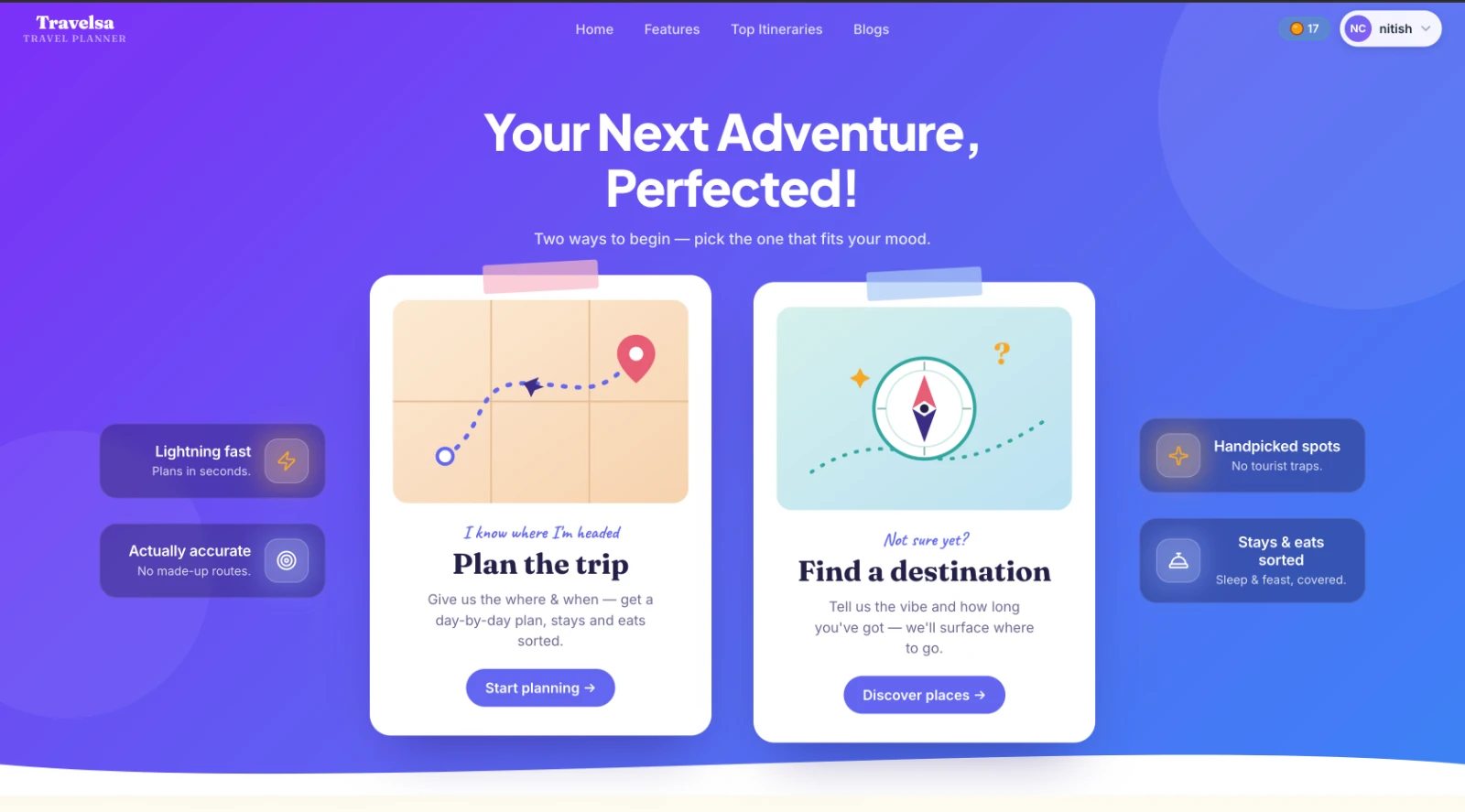
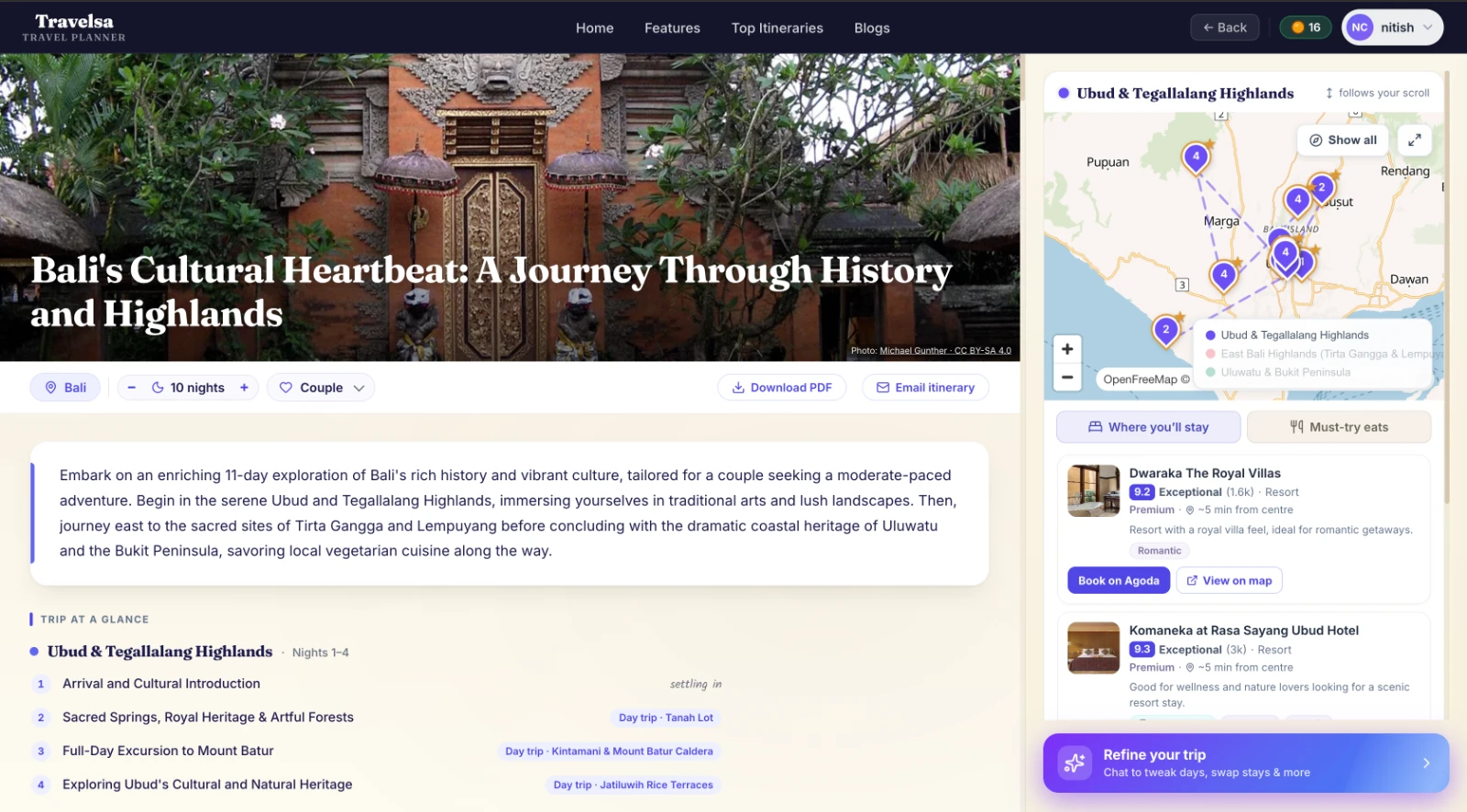
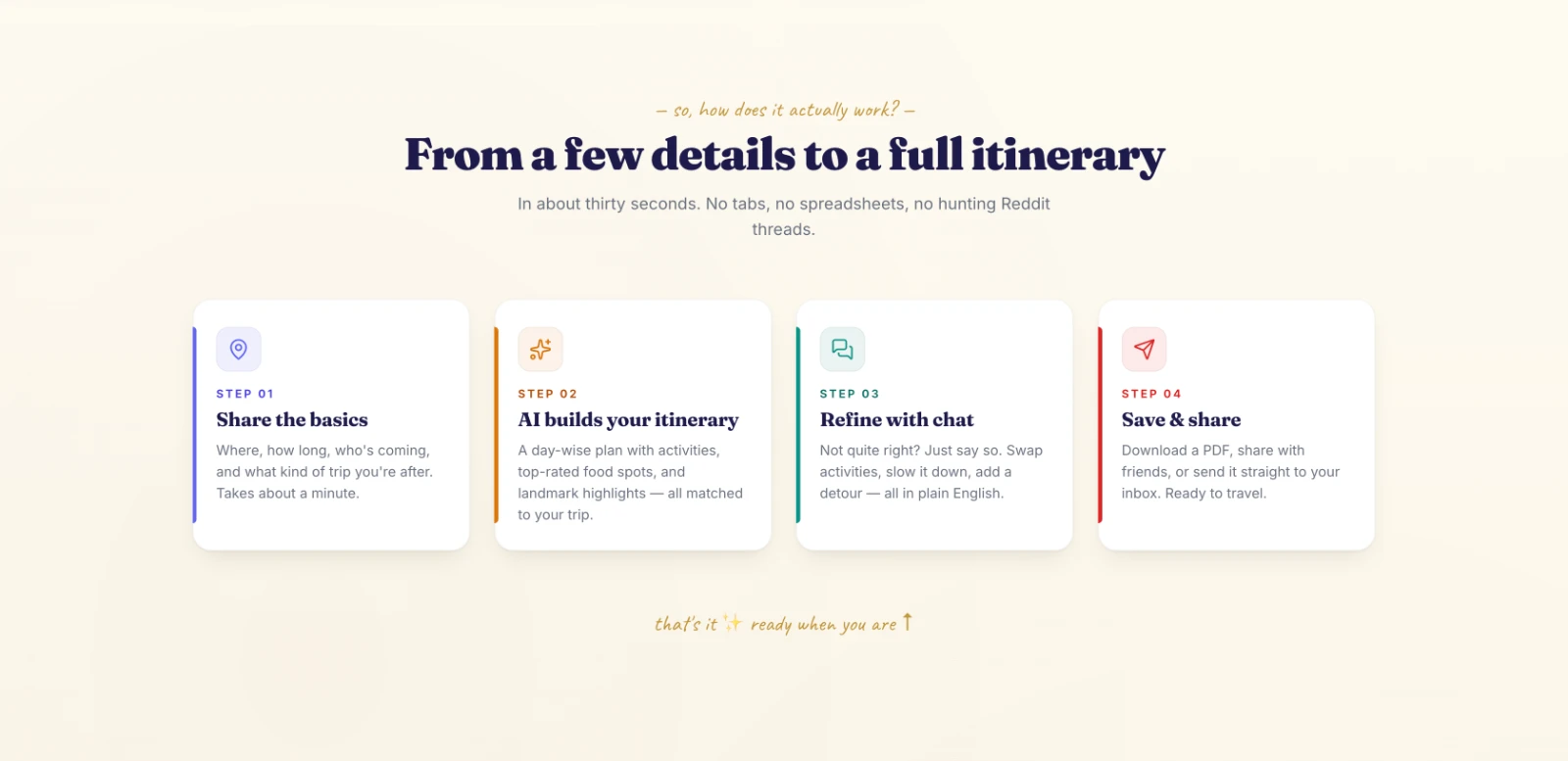
travelsa.ai is running today for consumers: users enter a destination, dates, their travel persona and interest and get a day-by-day personalised itinerary where every place, distance and transfer has been verified, with monetisation through booking affiliates.
Nothing is a black box. Behind it is an admin layer where we inspect and tune everything the pipeline produces: every verified place with its sources and confidence, the scoring weights that decide what ranks, the zone and pacing rules the planner uses.
The same engine runs on a travel company's data. Travel agencies and destination management companies have inventory, contracted rates, and years of past itineraries encoding how they plan, but no way to ship AI planning, because they can't put a hallucinating model in front of customers and can't audit what it produces. We load their inventory and past itineraries, calibrate the planner to their house style, and they get an itinerary builder where every element traces to a source they can defend.